
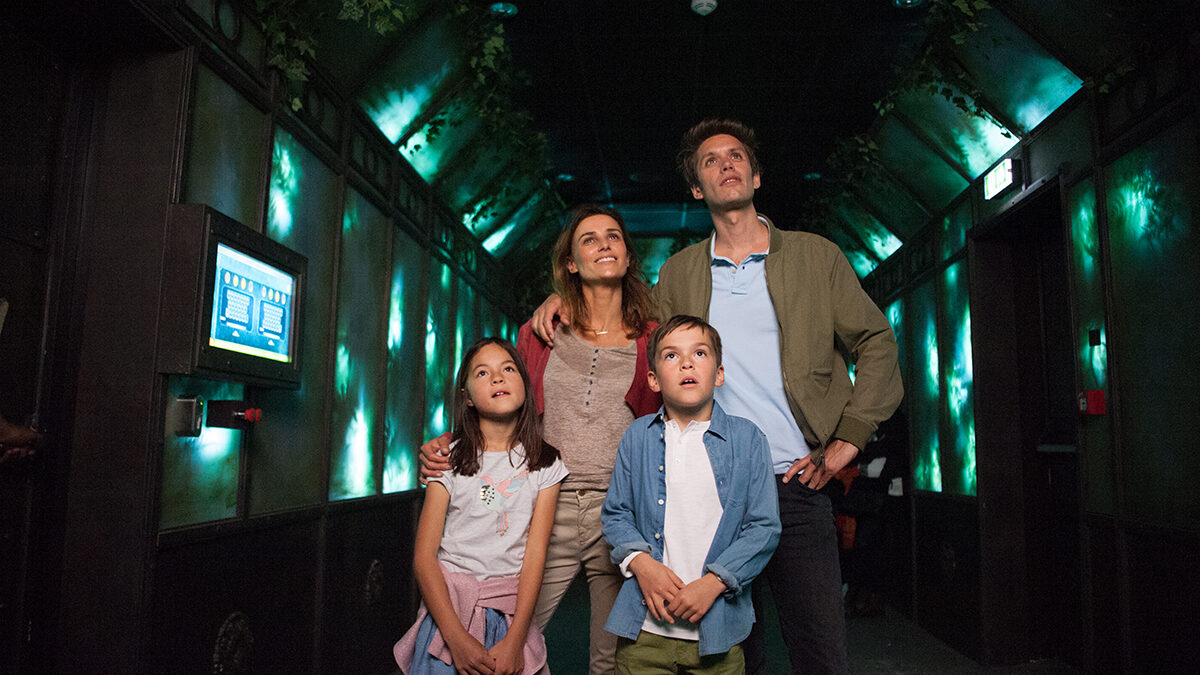
Published on the Winter Editions of InterPark Magazine
In an age when guests expect every moment of a theme park visit to be personal, responsive, and memorable, few companies have done more to redefine how audiences interact with stories than Alterface. From its roots as a small Belgian spin-off from the University of Louvain-la-Neuve to its present-day position as a global leader in interactive attractions, Alterface has spent more than two decades fine-tuning the art of making technology invisible. Its innovations let visitors stop being passive spectators and instead become the heroes of their own stories – active participants in worlds that react, surprise, and delight.
Innovation as Experience Design
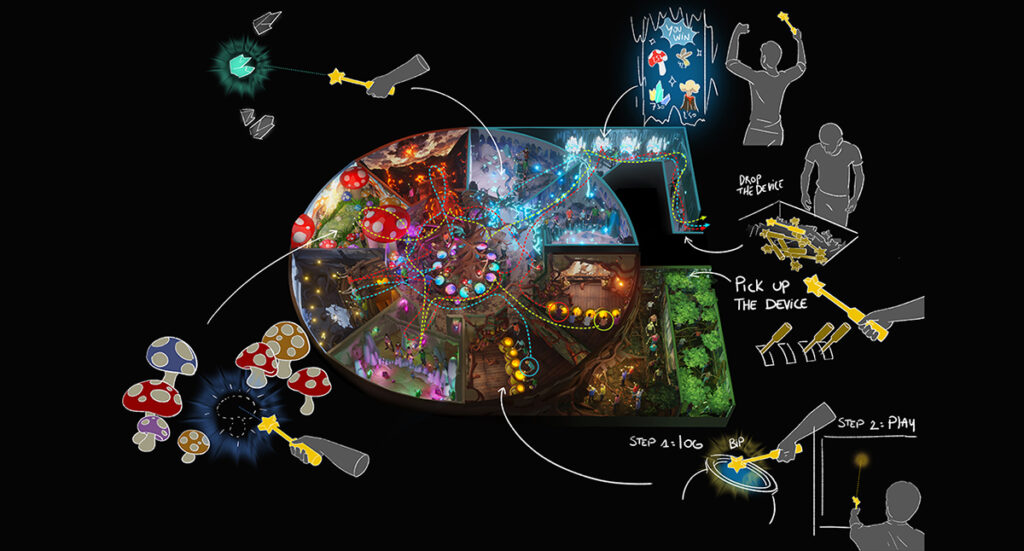
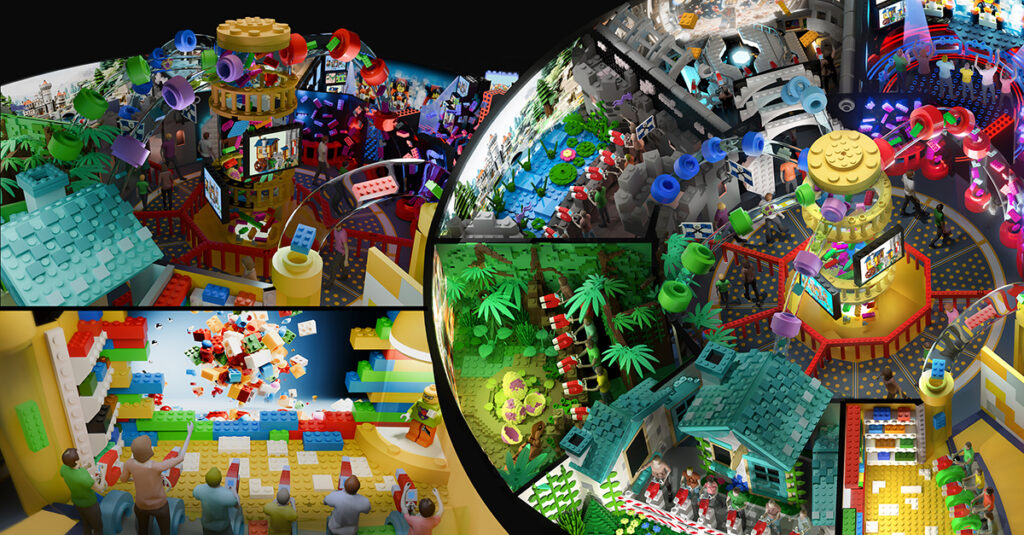
For Alterface, interactivity isn’t just a feature – it’s the heartbeat of an attraction. “Technology should never be the star of the show,” explains CEO Stéphane Battaille. “Our goal is always to make guests forget it’s there – to let them feel the story, the emotion, the challenge.”
That philosophy has driven the company’s creation of interactive dark rides, theatres, and media-based attractions, including Walibi Belgium’s Popcorn Revenge, Legendia’s Basilisk, Phantasialand’s Maus au Chocolat, and more than 30 dark rides at LEGO® Discovery Centres worldwide.
Across each project, Alterface’s systems translate guest actions into narrative consequences – shooting, choosing, revealing, collecting – giving every visitor a role to play and a reason to return. This concept of “interactivity by design” now sits at the centre of Alterface’s creative and technical process. The company’s newest initiative, the Interactive Concept Design service, extends that philosophy to the earliest stage of attraction planning. Rather than layering technology on at the end, Alterface helps operators, designers, and suppliers weave gameplay and story together from day one.
“We’ve seen a growing demand from clients who want to ensure their experiences attract and retain guests through dynamic interactivity,” says Battaille. “They’re asking for concepts where gameplay and storytelling feel natural – not bolted on. Our new service gives them that creative head start.”
The process considers every detail – narrative pacing, ride layout, visitor flow, budget, accessibility, and inclusivity – to deliver a clear, coherent vision of how interactivity will function across every creative and technical layer. The result is a smoother production process and an experience that feels organic, not mechanical.
The Power of Invisible Technology
Alterface’s approach has always been defined by balance: cutting-edge technology made effortless for the guest. The company’s ecosystems – from real-time media servers to motion tracking, proprietary storytelling engines, and advanced group scoring logic – are all built to fade into the background.
As Battaille describes it: “Our mission is to transform the show system into a storytelling instrument. The less people notice the tech, the more powerful the illusion becomes.”
That philosophy is evident in every award-winning attraction the company has touched. In Maus au Chocolat at Phantasialand, guests take aim at animated mice in a fully synchronised environment where media, lighting, sound, and set pieces work in harmony. At Bazyliszek in Poland, gameplay unfolds through a richly themed world where physical scenery blends seamlessly with digital media, earning both THEA and Park World Excellence Awards. And Popcorn Revenge – Alterface’s signature erratic dark ride – turned the industry’s head with its blend of humour, unpredictability, and replayability.
A Creative Force: Laurence Beckers

At the heart of this innovation is Laurence Beckers, Alterface’s Creative Director and recipient of the 2025 Industry Icon (Supplier) Award at the Park World Excellence Awards – recognition of a career spent redefining what interactive storytelling can be. Beckers joined Alterface in the early 2000s, a time when interactive attractions were largely the preserve of major operators like Disney. Regional parks wanted similar engagement but lacked the tools or budgets. Working with Alterface’s technical team, Beckers helped bridge that gap, developing a new creative model for interactivity that was scalable, flexible, and affordable.
Her early projects – from Desperados and Castle of Chaos to Maus au Chocolat – were industry firsts. They proved that interactivity could be cinematic: that story, gameplay, and media could fuse into a group experience where every guest mattered. These experiments laid the foundations for Alterface’s later breakthroughs and for an entire generation of interactive dark rides. “Laurence’s vision and dedication have shaped the way audiences play and connect,” says Battaille. “She’s one of the rare creatives who truly understands both narrative flow and technical architecture.”
Beckers’s collaborative approach has become part of the Alterface DNA. Her teams work hand in hand with clients, show producers, and IP owners to craft solutions that are technically elegant and emotionally resonant. It’s an approach that has earned Alterface a formidable record of recognition – from THEA Awards for Bazyliszek, Popcorn Revenge, Sesame Street: Street Mission, and Justice League: Battle for Metropolis to European Star Awards and IAAPA Brass Rings. Yet for Beckers, the measure of success remains simple: “When guests forget about the system and just live the story – that’s when we know we’ve succeeded.”
Magic Meets Mechanics
Alterface’s latest creative collaborations continue to push that boundary between the visible and the invisible. During IAAPA Expo Europe 2025, the company’s booth became a talking point for its partnership with Levita – a team of illusionists exploring how stage magic can enhance interactive storytelling. Floating objects and live illusions hinted at a new generation of experiences that fuse magic tricks with real-time gameplay. “It felt natural to involve magicians,” says Battaille with a smile. “They understand the art of guiding attention – exactly what great interactive design does.”
This fusion of engineering and enchantment underlines Alterface’s wider philosophy: the magic isn’t in the device, it’s in the design. Whether through gameplay, projection mapping, or levitation, the goal is the same – to create moments guests can’t quite explain but will never forget.
The collaboration will continue to evolve, with new developments unveiled at IAAPA Expo in Orlando (Booth #862).
Interactivity for a New Era
The launch of the Interactive Concept Design service signals a new chapter for Alterface – and for the wider attractions industry. As competition intensifies and audiences become more sophisticated, the difference between a good ride and a great one increasingly lies in how alive it feels.
By embedding interactivity from concept to completion, Alterface offers a blueprint for the future: attractions that learn, respond, and evolve with every guest. It’s a future where technology disappears behind emotion – and where every ride tells a new story because every guest plays it differently.
“We’re helping parks move from fixed shows to living worlds,” says Battaille. “That’s the direction entertainment is heading – personal, adaptive, and endlessly replayable.”
The Next Chapter
And there’s more to come. InterPark has learnt that just weeks after IAAPA Orlando, Alterface will unveil a new generation of interactive technology inside a ground-breaking attraction. Details remain under wraps, but early hints suggest a leap forward in personalised, data-driven guest engagement – the next step in making interactivity feel effortless, intuitive, and alive.
As Beckers puts it: “We’ve always believed the best technology is the kind you don’t see. You just feel it – in the laughter, the competition, the shared story. That’s where the magic really happens.”