
Published on InPark Magazine, on August 31 of December
Interview by Martin Palicki
Alterface celebrates 25 years of creating engaging interactive experiences across the world of themed entertainment
For 25 years, Alterface has helped redefine what interactive attractions can be. From pioneering multiplayer interactive theaters and trackless dark rides to immersive walkthroughs and next-generation projection-based gameplay, the team at Alterface has consistently pushed the boundaries of guest participation while remaining committed to one guiding principle: technology should disappear, allowing guests to become the heroes of their own stories.
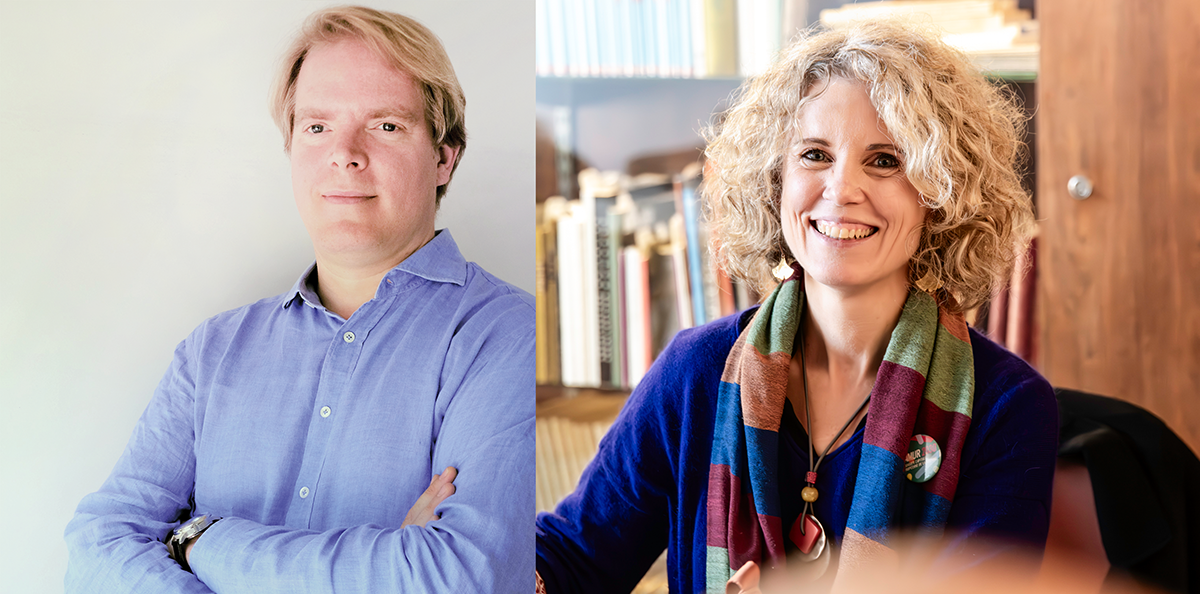
To mark Alterface’s 25th anniversary, InPark spoke with Chief Creative Officer Laurence Beckers, who has been with the company since its inception, and CEO Stéphane Battaille. Together they reflect on the company’s evolution over the past quarter century and share their thoughts on where interactive entertainment is headed next.
I’ve always been curious. Where did the name Alterface come from?
Laurence Beckers: The name originates from “alter,” meaning “the other,” and “face,” from the French word meaning “side.” We wanted to create attractions where guests could reach the “other side” of a story, not just be part of an audience – to offer a different and new reality in which they become participants in creating their own tale of adventure, not just viewing someone else’s tale.
Speaking of origins, Alterface began by creating experiences for museums and science centers before moving into themed attractions. How did those early projects shape the company?
Stéphane Battaille: Our original goal was to invent new ways for people to interact naturally with digital content.
Back in 2001, we were developing gesture recognition systems for museums that allowed guests to become part of a digital environment, years before technologies like Kinect existed. Every museum project was different, so we experimented with countless forms of interaction. It gave us tremendous freedom to innovate.
Those early years taught us which types of interaction truly engage people and which don’t translate well to high-capacity attractions. Theme parks introduced entirely different challenges, especially throughput and operational reliability, but they also gave us the opportunity to create larger, more immersive experiences.
Beckers: Those projects also established principles that are still part of Alterface’s DNA today. We learned to balance creativity with technology while always designing around the guest experience. In the beginning every installation was custom-built, but over time we standardized our technologies without losing that user-centered approach.
Looking across your portfolio of projects which innovations do you feel had the greatest impact on interactive attractions?
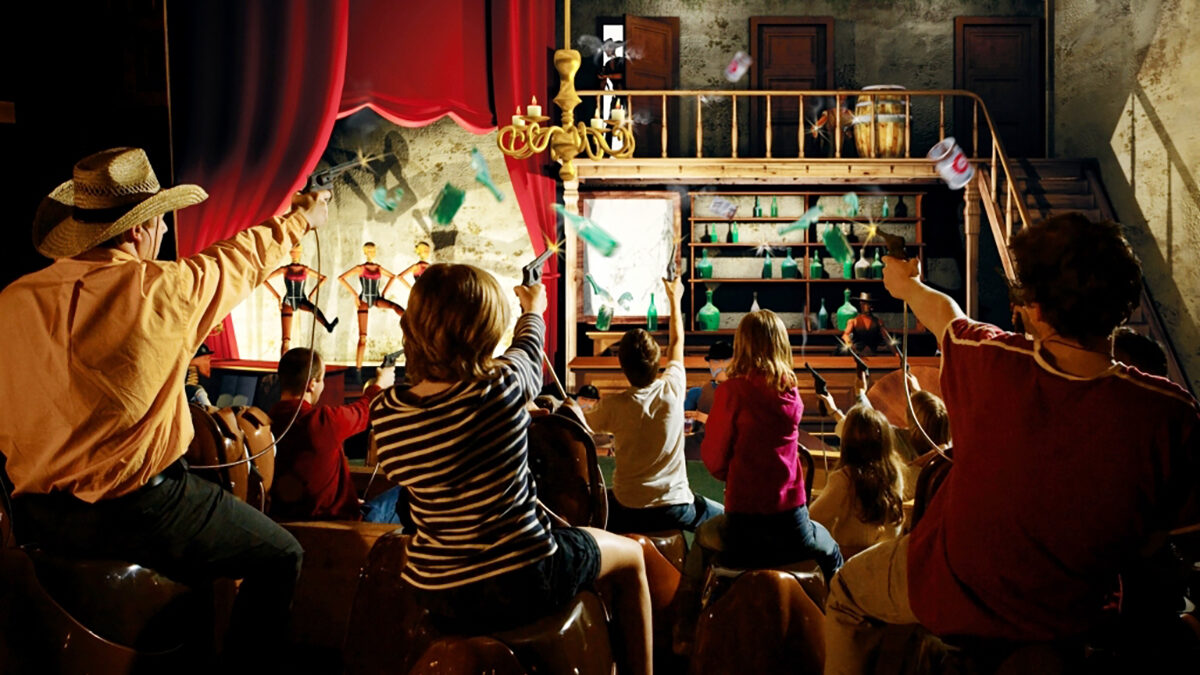
Battaille: Desperados was certainly one of the biggest milestones. It demonstrated that large groups of guests could play together simultaneously, creating a shared multiplayer experience that simply hadn’t existed before. It changed both the technology and the gameplay.
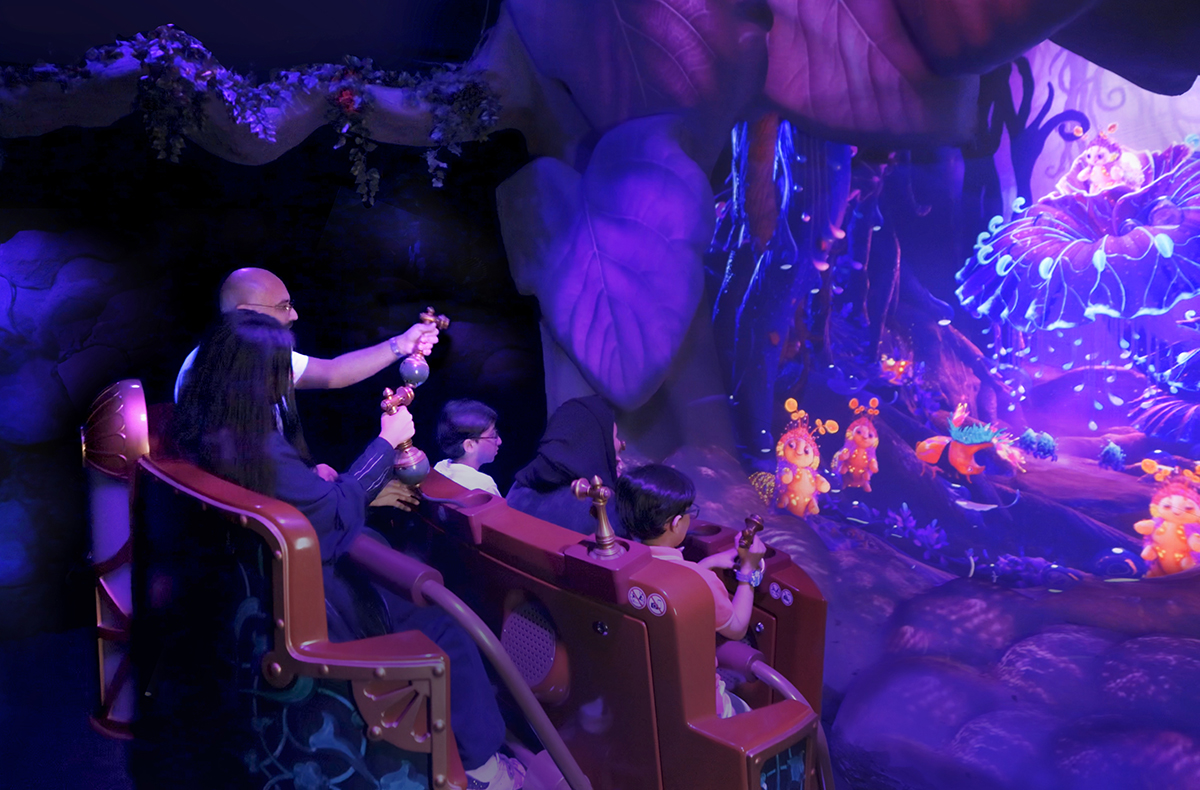
Another important moment came in 2008 with Reset Anno Zero at Miribilandia, where we blended both physical and digital media targets. It opened only one month after Disney’s Toy Story Midway Mania! and really made that style of gameplay accessible to many types of parks. The impact from that innovation continues today because we believe the most convincing experiences combine real environments with digital storytelling instead of replacing one with the other. More recently, Popcorn Revenge introduced nonlinear ride experiences.
Guests’ actions could influence the path their vehicle followed, giving them a meaningful impact on the story itself. That concept is still evolving, and as ride systems become more sophisticated, we see even greater opportunities for personalized storytelling.
Throughout Alterface’s history, you’ve said that technology should be invisible. Why has that remained such an important philosophy?
Beckers: Because the moment guests notice the technology, they’re pulled out of the story. Everything we do is aimed at preserving immersion. Whether it’s projection mapping, synchronized motion, audio, tracking systems, or interactive media, every technical element should disappear into the experience. Guests shouldn’t be thinking about projectors, sensors, or computers. They should simply feel like they’re part of the adventure.
You mentioned that Popcorn Revenge demonstrated that the ride vehicle itself could become part of the storytelling. How important have advances in ride systems been compared to developments in media or gameplay?
Battaille: They’re inseparable. Popcorn Revenge was developed together with ETF Ride Systems, and we both had to create new tools to support nonlinear storytelling. It wasn’t simply about designing a trackless vehicle. The show control, media systems, and ride logic all had to work together.
Today’s ride systems are becoming even more flexible. Advances in LiDAR, SLAM navigation, and autonomous vehicle technology are opening entirely new possibilities. We can begin thinking of ride vehicles as intelligent robots rather than machines that simply travel from one programmed location to another.
Early interactive attractions often focused on competitive scoring. More recent projects emphasize exploration, cooperation, and narrative. Do you see that as a shift in the industry?
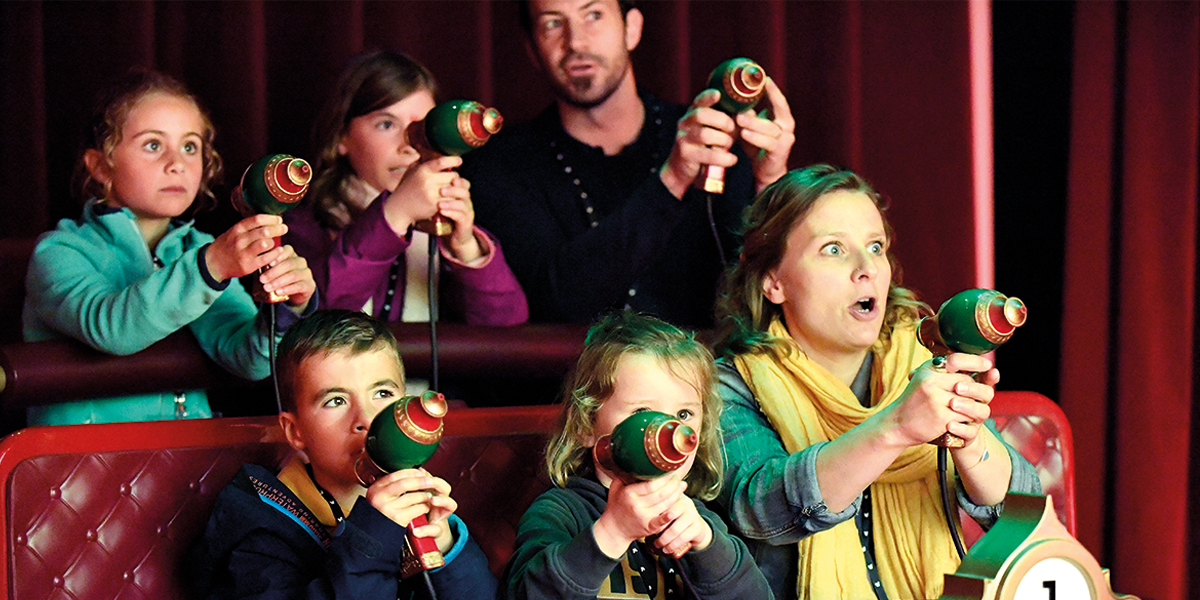
Battaille: I see it as an expansion rather than a replacement. Competitive gameplay is still incredibly effective when it fits the story. But today’s technology allows us to explore many more forms of interaction. Instead of always giving guests a blaster, we can give them a flashlight, a magic wand, or a paintbrush. Each interaction creates a completely different emotional experience.
A shooting attraction naturally focuses players on targets. Exploration-based gameplay encourages guests to look at the environment, discover details, and experience the story together. That opens the door to richer narratives and appeals to a broader audience, particularly families.
One of Alterface’s newest technologies reduces interaction latency to around 30 milliseconds. That’s a very technical achievement, but what does it actually mean for guests?
Battaille: It means the technology disappears. There is no reality check. When you’re using a flashlight, magic wand, or paintbrush, the projected effect has to respond instantly. Even a slight delay reminds guests they’re interacting with a computer. By reducing latency to around 30 milliseconds, the response feels completely natural. That immediacy is what makes these new forms of interaction believable.

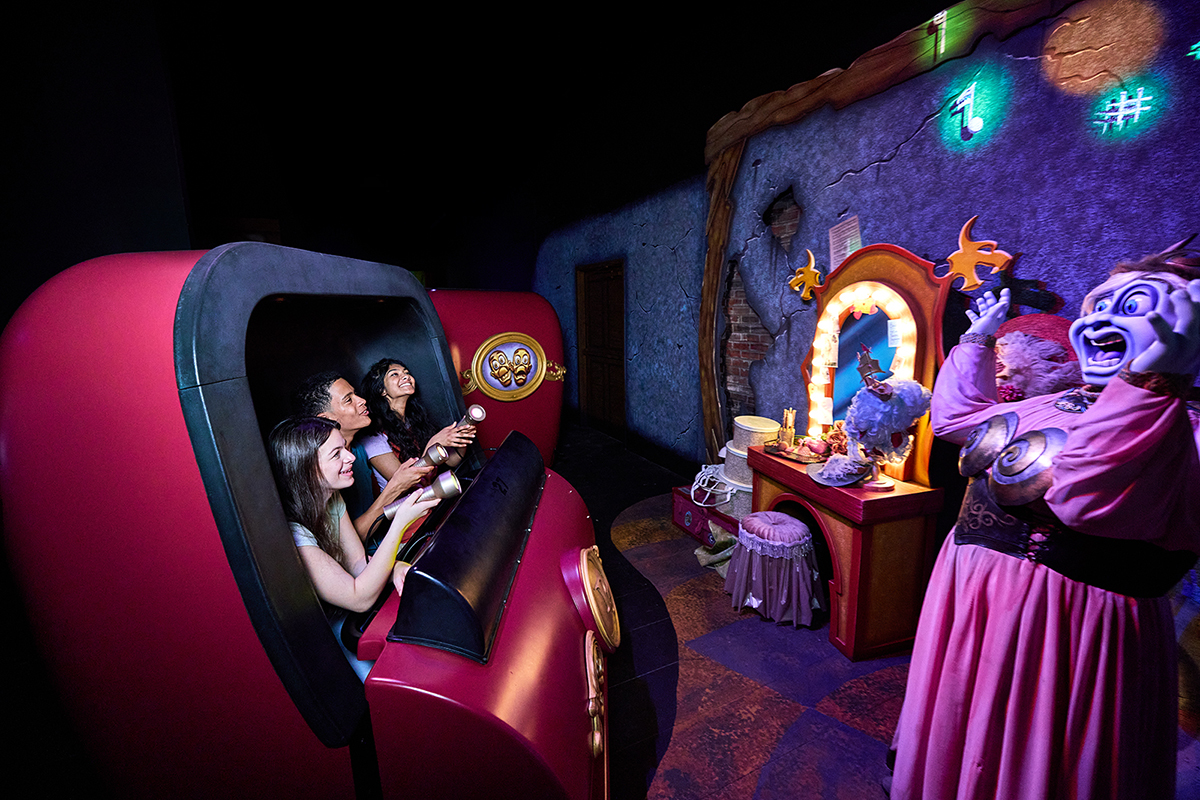
Phantom Theater: Opening Nightmare at Kings Island is the first attraction to use this next-generation technology. What makes it significant?
Battaille: It’s the best example of adding projection and gameplay into a scenic environment. Instead of just projecting on screens surrounded by sets, the sets become the backdrop for the projection, which is an incredibly natural way to present the media. Rather than simply aiming at targets, guests use a flashlight to explore the environment and find floating “ghost notes.” That changes the pace of the experience. Instead of searching for the next target, guests begin looking around, exploring the world, and noticing details they might otherwise miss.
Beckers: For us, that’s a very important evolution. The interaction supports the story rather than distracting from it. Our collaboration with Sally Dark Rides was also extremely rewarding because we share the same philosophy. The technology is present, but it never becomes the focus. Guests simply experience the magic.
Walkthrough attractions such as Stranger Things: Face the Dark represent another area of growth. Do you see walkthrough experiences becoming more common?
Battaille: Absolutely. Walkthrough attractions create a different kind of immersion because guests are physically inside the environment. They choose where to go, what to explore, and how long they spend with each scene. That demands a much more convincing and complete environment.
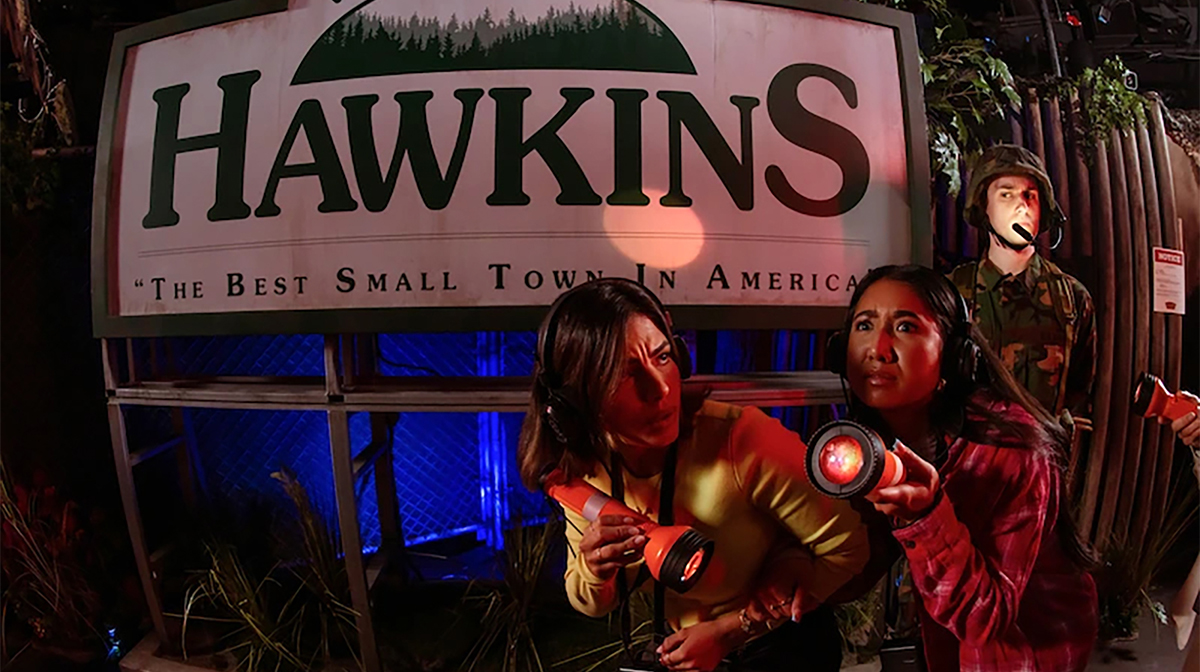
Walkthroughs also require an entirely new technology stack. We need accurate guest tracking, adaptive storytelling, and systems capable of responding intelligently to unpredictable human behavior.
They’re also an excellent fit for video game intellectual properties. Many game publishers are looking for ways to translate open-world experiences into physical environments, and walkthrough attractions are uniquely suited to that challenge.
Many of your attractions continue operating successfully years, and sometimes decades, after opening. What have you learned about designing experiences that remain engaging over the long term?
Battaille: Interactivity naturally encourages repeat visits because guests want to improve, compete, or discover something they missed the first time. That’s one of its greatest strengths. When we design an attraction, we also try to build in layers of discovery. Every ride should reward guests for paying attention, whether it’s subtle visual details, environmental storytelling, or small surprises they notice on subsequent visits. We’ve learned that if the core experience is strong, operators rarely want to replace it.
Beckers: We’ve seen that happen many times. Operators often ask us to modernize the technology while keeping the experience exactly as guests remember it. Sometimes we’ll migrate an attraction to a new real-time engine or install higher-resolution projection, but the story and gameplay remain unchanged because they still resonate with visitors.
How do you think AI will impact the guest experience in interactive attractions?
Battaille: AI-powered characters will eventually allow much more personalized interactions. Imagine a walkthrough attraction where characters remember what you’ve done, respond naturally to your questions, and adapt the story to your choices. That creates a level of personalization we haven’t been able to achieve before. Combined with real-time translation, those technologies could make interactive experiences more personal and more accessible than ever before.
What advice would you give an owner who is considering adding interactivity to an attraction for the first time?
Battaille: My first answer would be: Call us! But more seriously, interactivity should never be treated as an overlay or a gimmick. It must serve the story. The guest’s actions need to have meaning within the narrative. If you’re simply adding targets or a game mechanic after the attraction has already been designed, you’re missing the opportunity to create something memorable.
Beckers: Interactivity should be part of the creative process from the very beginning. When it’s integrated into the story, guests become active participants instead of observers, and that’s when it creates a lasting emotional connection.
Alterface has always worked closely with ride manufacturers, media studios, scenic designers, and creative partners around the world. Has collaboration always been central to the company’s philosophy?
Battaille: Absolutely. We’ve never wanted to do everything ourselves. Our role is to contribute our expertise while working alongside the best people in every discipline. The strongest projects are always the result of collaboration between specialists who bring different perspectives and different talents to the table.
Beckers: Collaboration is also cultural. Working internationally has reinforced how important it is to partner with local creative teams. Interactive storytelling is deeply connected to culture. If you’re creating an attraction in Asia, Europe, or North America, local knowledge helps ensure the story feels authentic to the audience. Working with regional partners also allows us to build stronger relationships while creating experiences that genuinely belong in their markets.
Looking ahead another 25 years, what do you hope people will say about Alterface’s contribution to themed entertainment?
Battaille: I hope they’ll say that we continually pushed the boundaries of interaction to create experiences that were more immersive, more personal, and more meaningful. But more than that, I hope they’ll remember that our attractions brought people together. Families laughing together. Friends competing together. Guests exploring together and creating memories they could share afterward. That’s always been our goal.
